
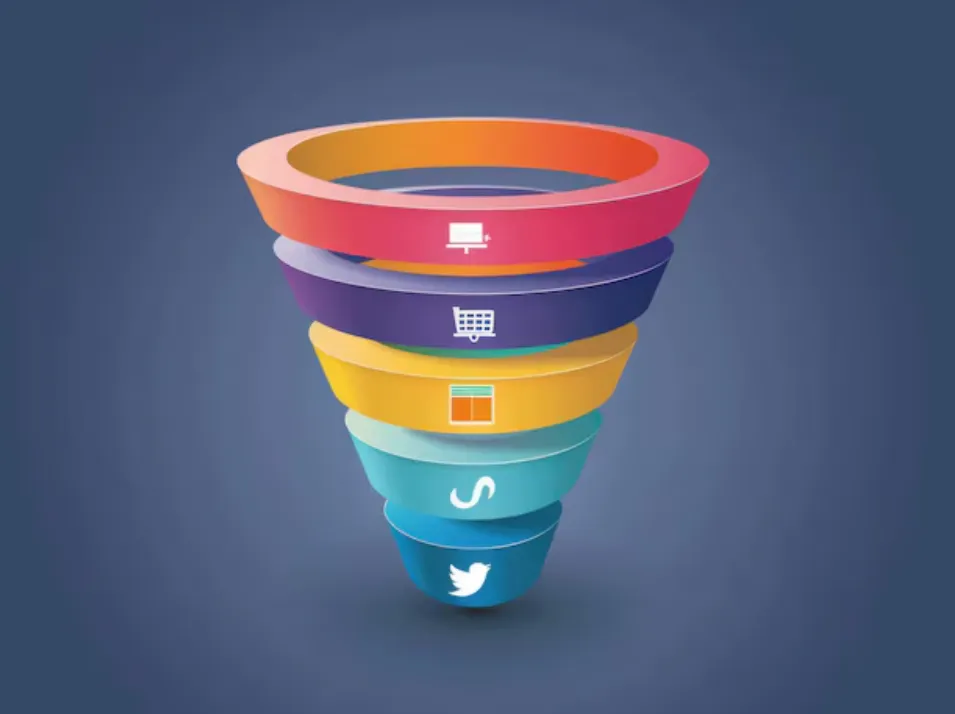
Most marketing and growth teams still design funnels as if every user behaves uniformly. In reality, people arrive with different intent levels, preferences, and constraints and forcing them through a fixed path creates leaks at every stage. Modern ai decisioning pro systems change this by deciding, in real time, what should happen next for each user: what to show, what to offer, and when to back off. Instead of a static funnel, you get a dynamic one that adapts to behavior and context.
This article explains how automated decisioning works, where it plugs into the funnel, and how it can meaningfully improve performance across acquisition, conversion, and retention.
What AI Decisioning Really Means in a Funnel Context
AI decisioning is the practice of using algorithms to choose the “next best action” for each user based on data.
That action could be:
- Which product to recommend
- Which message or creative to show
- Whether to show an offer or hold back
- Which channel or touchpoint to use next
- How aggressively to follow up (or not at all)
Instead of relying on a handful of manual rules, automated decisioning evaluates multiple signals simultaneously and updates decisions as new data becomes available.
Why Many Funnels Underperform Without Smarter Decisioning?
Most funnels underperform not because traffic is bad, but because the experience is too rigid.
Common problems:
- Everyone sees the same homepage, regardless of intent
- High-intent users get distracted by generic content
- Low-intent users are pushed to buy before they trust the brand
- Discounts are shown to people who would have paid full price
- Re-engagement campaigns fire even when users are clearly not interested
The result:
- Lower conversion rates
- Bloated acquisition costs
- Misused discounts and incentive spend
- Wasted remarketing impressions
AI decisioning helps by tailoring what users see and experience at the moments that matter most.
How Automated Decisioning Fits Across the Funnel?
Instead of thinking about AI as a single feature, it helps to map where it influences funnel steps.
Top of funnel (awareness and traffic)
- Choose which creative variation to show based on predicted click behavior
- Route users to different initial experiences (e.g., content vs. offer) based on source and context
Mid-funnel (browsing and consideration)
- Reorder products or content based on inferred preferences
- Highlight different benefits (price, quality, reviews, sustainability) depending on user signals
- Decide whether to show education, comparison, or urgency
Bottom of funnel (cart and checkout)
- Decide when to surface reassurance (returns, shipping clarity, guarantees)
- Trigger smart offers only when truly needed to rescue high-value carts
- Suggest bundles or upgrades most likely to be accepted
Post-purchase (retention and loyalty)
- Choose the best next product or category to promote
- Decide on subscription nudges vs. one-off purchases
- Tailor win-back journeys based on predicted reactivation likelihood
The more decisions you automate intelligently, the more efficient each step becomes.
How an AI Decisioning System Typically Works?
Although implementations vary, the logic typically follows a consistent pattern.
- Collect signals
- On-site behavior: pages viewed, time on page, scroll depth, cart actions
- Identity and history: purchases, visits, returns, category interest
- Context: device, location, referral source, time of day
- Business inputs: inventory, margins, campaign priorities
- Score intent and opportunities
- Likelihood to convert now
- Likelihood to respond to an offer
- Likelihood to purchase higher-value items or bundles
- Risk of churn or drop-off
- Pick the next best action
- Show a specific recommendation set
- Trigger an in-page nudge or reassurance message
- Suppress a discount and hold full price
- Move the user to a different flow or content path
- Learn from outcomes
- Did the user engage?
- Did they convert or abandon?
- Did the AOV or margin improve?
Over time, the system optimizes toward actions that deliver better funnel results.
Practical Examples of AI Decisioning Improving Funnel Performance
To illustrate this more concretely, consider the following realistic scenarios.
Example 1: Reducing early bounce on landing pages
Instead of showing the same hero section to all visitors, AI can:
- Show category-led content to users coming from generic search
- Show specific product-led layouts to users from high-intent ads
- Push educational content (guides, quizzes) to first-time visitors who need context
Result: fewer bounces, more users moving deeper into the funnel.
Example 2: Boosting add-to-cart and AOV on product pages
On PDPs, automated decisioning can:
- Emphasize reviews and social proof for hesitant shoppers
- Highlight technical specs for detail-focused users
- Show bundle recommendations when multi-item interest is detected
Result: More items added to cart and a higher average cart value.
Example 3: Improving checkout completion without over-discounting
At checkout, AI can:
- Trigger free shipping thresholds only for price-sensitive users
- Avoid showing discounts to users with high willingness to pay
- Add reassurance modules (returns, shipping dates) for risk-averse profiles
Result: higher completion rates and better margins.
Example 4: Smarter win-back and retention flows
For past customers, AI decisioning can:
- Identify which customers are likely to reorder soon and send them tailored offers
- Detect low reactivation probability and reduce spend on those segments
- Decide whether to push replenishment, cross-sell, or content-only outreach
Result: better LTV and more efficient lifecycle marketing.
How Automated Decisioning Directly Improves Key Funnel Metrics?
Done well, AI decisioning shows up clearly in numbers that matter.
Improvements you can expect:
- Higher conversion rate – Because users see the right content and offers for their intent level.
- Higher AOV – Because bundles, upgrades, and add-ons feel relevant rather than random.
- Better margin protection – Because offers and discounts are targeted instead of blanket.
- Lower CAC relative to revenue – Because the same traffic converts at a higher rate, making acquisition more efficient.
- Stronger retention and LTV – Because experiences feel more tailored, reducing churn and driving repeat purchase.
Steps to Start Using AI Decisioning Without Overcomplicating the Stack
You do not need to overhaul everything at once. A phased rollout works better.
Suggested approach:
- Define the funnel problem first
- Is the biggest leak early bounce, low add-to-cart, or checkout drop-off?
- Focus AI decisioning where the impact will be most obvious.
- Start with one surface and one decision
- For example: dynamic recommendations on PDPs, or smart incentives in checkout.
- Measure impact before expanding.
- Connect the right data sources
- Web or app behavior analytics
- Transaction and order history
- Marketing campaign metadata
- Align teams on guardrails
- Which offers are allowed where
- Which user segments should never be pushed aggressively
- How to handle privacy and consent standards
- Iterate and expand
- Once you see lift in one area, extend AI decisioning to other parts of the funnel.
Common Mistakes to Avoid When Rolling Out Automated Decisioning
It is easy to misuse AI and hurt user experience if you treat it as a magic switch.
Avoid:
- Turning on too many automated decisions at once with no control
- Over-personalizing to the point where users feel watched
- Using AI only to push harder offers instead of improving relevance
- Ignoring edge cases, such as new visitors with little data
- Failing to define clear success metrics before implementation
Good AI decisioning feels like intelligent UX, not aggressive marketing.
Final Thoughts
AI decisioning is not just a buzzword; it is a structural shift in how funnels operate. Instead of building rigid paths and hoping users follow them, brands can now let the funnel adjust itself to each shopper in real time. That flexibility, powered by data and automation, is what turns average funnels into high-performing ones.
If you treat automated decisioning as a way to help customers make better choices faster, your funnel performance will improve as a natural side effect.