
In the world of digital finance, most people focus on the wrong question. They ask, “Where is the price going?” when they should be asking, “Can I actually trade at that price?” As of January 26, 2026, the Ethereum market is navigating a complex range near $2,900. While analysts debate whether a move toward $3,500 or a retest of $2,800 is next, professional traders are focusing on a far more critical factor: Execution and Liquidity.
In a year where Ethereum has transitioned into a mature institutional asset, a prediction is only as good as your ability to act on it. If you predict a price move but lose 2% of your position to poor execution, your strategy has failed before it even started.
- Liquidity: The “Water” in the Trading Pool
To understand liquidity, imagine you are trying to sell a rare vintage car. If there are only two people in the world who want to buy it, you might have to wait weeks or settle for a lower price just to get the deal done. That is an illiquid market.
Now, imagine selling a gallon of milk. Millions of people buy milk every day. You can sell it almost instantly at the exact market price. That is a liquid market.
In the digital asset world, liquidity refers to how easily you can buy or sell large amounts of an asset without drastically moving the price. Currently, Ethereum has become one of the most liquid assets on the planet, with billions of dollars in “buy” and “sell” orders sitting on the books at any given second. However, not all platforms access this liquidity the same way.
- The Hidden Tax: Understanding Slippage
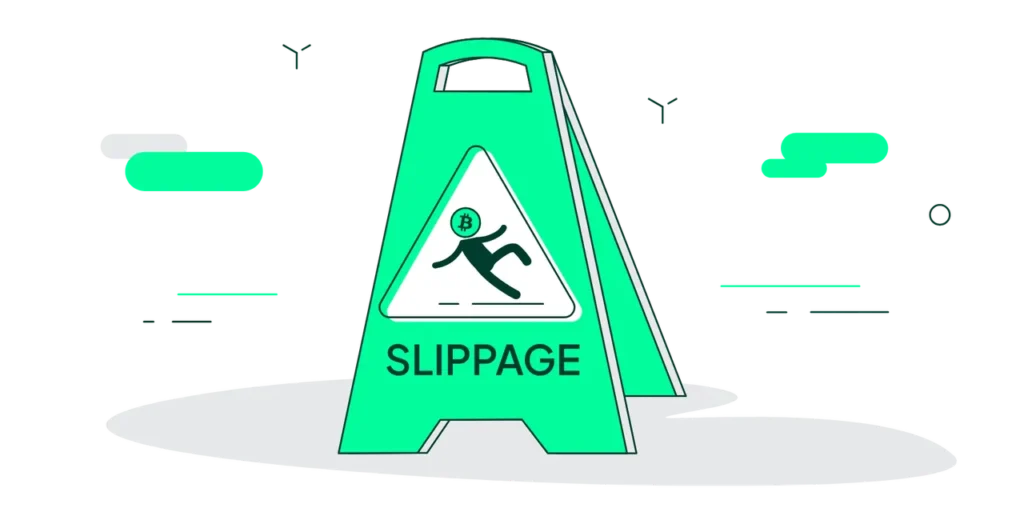
The biggest enemy of a modern trader is Slippage. Slippage is the difference between the price you expect to pay and the price you actually pay.
For example, if the current ETH/USD price is $2,895 and you place a large buy order, a platform with low liquidity might only have a small amount of ETH at that exact price. To fill the rest of your order, the platform has to buy at $2,900, then $2,905. By the time your order is finished, your average price is much higher than you planned.
You just paid an extra fee—a “hidden tax” that eats into your profits. Successful traders look for platforms with Deep Order Books, where even large trades can be filled at the intended price with minimal slippage.
- Execution Speed: Winning the “Millisecond War”
In 2026, the market moves in milliseconds, not minutes. Modern trading is influenced by global news, automated algorithms, and high-frequency systems. If you see the price hitting a support level and decide to buy, a slow execution speed can be devastating.
If your platform takes two seconds to process your order, the price might have already bounced up. This “latency” means you are always chasing the market rather than leading it. High-quality execution means that the moment you click “Trade,” your order is matched and filled instantly.
- Market Depth: The Buffer Against Volatility
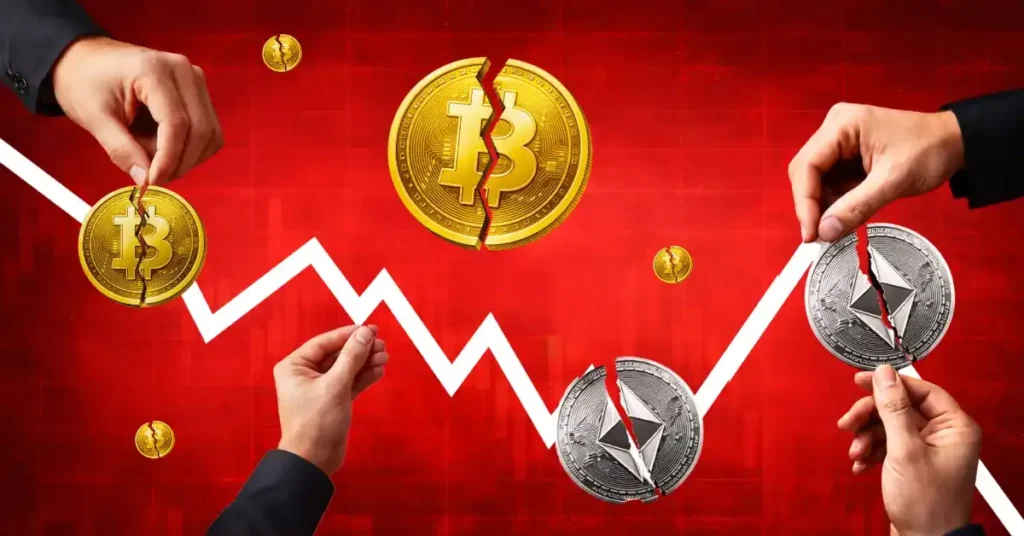
Volatility is often seen as a risk, but for an active trader, it is an opportunity. However, you need Market Depth to survive it. Market depth is the ability of the market to absorb large orders without causing a massive price swing.
When global news causes a sudden flurry of activity, a platform with shallow depth might experience a “flash crash” where the price drops 5% in a second, only to bounce back. On a platform with deep liquidity, that same order is absorbed like a drop of water in the ocean, keeping the price stable and protecting your risk management levels.
- The Institutional Shift of 2026
One reason liquidity is so important right now is the massive entry of Institutional Giants. In 2026, pension funds and insurance companies are actively participating in the Ethereum ecosystem. These players don’t trade small amounts; they move millions of dollars.
Because they require massive liquidity, they only use platforms that can handle “block trades” without disrupting the market. This institutional presence has created a “virtuous cycle”: more big players lead to more liquidity, which leads to tighter spreads (the gap between the buy and sell price), making it cheaper for everyone to trade.
- Real-Time Feedback: The Trader’s Dashboard
To navigate a liquid market, you need more than just a price line. You need clear, real-time data like Order Flow and Heat Maps.
A heat map shows you exactly where the “liquidity walls” are—the price points where thousands of people are waiting to buy or sell. By seeing these walls, you can predict where the price is likely to stall or bounce. This is “informed execution.” It’s the difference between guessing where the floor is and actually seeing the foundation.
Zoomex: Built for the “Controllable Performance” Era
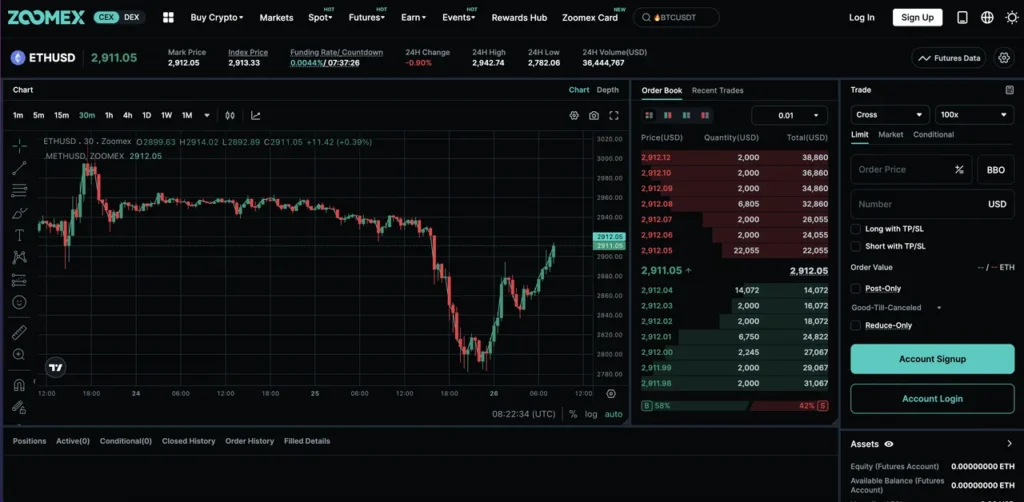
When the stakes are high and the market is moving at terminal velocity, you need a partner that treats your execution as a mission-critical task. This is the core philosophy behind Zoomex.
The connection between high-stakes racing and high-stakes trading has never been more relevant than in 2026. Zoomex is the official partner of the TGR Haas F1 Team. This month, as the Haas team unveiled their new VF-26 race car, the focus was on System Efficiency and Stable Execution. In Formula 1, you can have the fastest car in the world, but if the gear shifts are slow or the telemetry lags, you won’t finish the race. Zoomex applies this same engineering rigor to the digital markets.
Why Zoomex is the “Pit Crew” for your trades:
- Institutional-Grade Liquidity: Zoomex manages advanced market-making infrastructure to ensure that even in times of extreme volatility, there is always enough depth in the order book to fill your trades without massive slippage.
- Race-Day Execution: The Zoomex matching engine is built to handle high-frequency demands. It processes thousands of orders per second with “F1-level” precision, meaning your “click-to-fill” time is among the fastest in the industry.
- Controllable Performance: Just as the Haas F1 Team uses real-time telemetry to adjust their car during a race, Zoomex provides you with transparent tools to manage your risk. Their platform is designed to be stable when others are lagging, giving you a clear advantage during the market’s “sprints.”
By choosing a platform that values execution as much as the Haas F1 Team values track performance, you are giving your strategy the “engine” it needs to succeed.
The Verdict: Precision is the New Alpha
As we move through the first quarter of 2026, the era of “lucky guesses” is over. The traders who are consistently successful are those who respect the mechanics of the market. They understand that the price is just a signal, but liquidity and execution are the reality.
Don’t let your hard work be eroded by high spreads or slow servers. Focus on the quality of your execution, choose a platform built for performance, and treat your trading like an F1 race—where every millisecond and every basis point counts.