
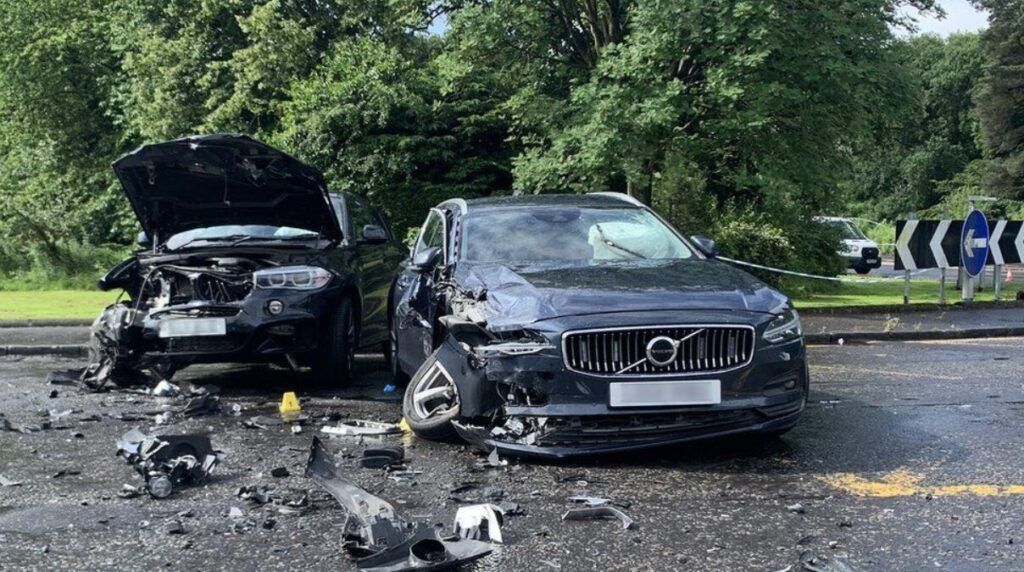
For decades, the role of the camera in a vehicle was strictly historical. It was a passive observer, a silent witness mounted to the windshield. Its job was simple: if something bad happened, it provided the footage to prove who was at fault. It answered the question, “What happened?”
But a fundamental shift is occurring in automotive safety. The passive observer is becoming an active guardian. Thanks to the explosion of edge computing and computer vision, the device on your windshield is no longer just recording pixels; it is understanding them. It is shifting the question from “What happened?” to “What is about to happen?”
The idea that a small plastic box can predict the future sounds like science fiction, but it is actually just very fast math.
The Physics of “Time to Collision”
To a human driver, a car slowing down ahead is a visual cue. We see brake lights. We estimate the distance. We move our foot to the brake. This process relies on attention, reaction time, and depth perception—all of which degrade when we are tired, distracted, or aging.
To a computer, that same car is a data point.
The processor inside the device identifies the vehicle ahead and draws a digital “bounding box” around it. By measuring the change in the size of that box frame-by-frame (as you get closer, the box gets bigger), the system calculates the relative speed and the distance.
This allows it to calculate the “Time to Collision” (TTC). If the TTC drops below a safe threshold—say, 2.5 seconds—the system issues an alert.
Crucially, the computer doesn’t blink. It doesn’t look at a billboard. It doesn’t check a text message. It is performing this calculation 30 times a second, for every object in its field of view. It creates a digital map of risk that is updated faster than the human brain can process.
The Internal Eye: Predicting Human Error
However, predicting a crash isn’t just about looking at the road; it’s about looking at the driver.
The most dangerous variable in any vehicle is the human operator. Fatigue and distraction are the leading causes of accidents. Traditional safety systems (like lane departure warnings) only react once the car physically drifts. By then, it might be too late.
The new generation of safety technology looks inward. Using facial mapping, the device monitors the driver’s eyes and head position.
It tracks “eyelid closure percentage.” If your eyelids start to droop or blink slowly—a sign of microsleep—the system detects the fatigue pattern before you even realize you are tired. It triggers a loud audio alert to snap you back to reality.
Similarly, it tracks gaze vector. If your head is turned down toward a phone in your lap for more than a few seconds while the vehicle is moving, it recognizes “distraction.” It doesn’t need to see the phone; it just needs to see that your eyes aren’t on the road.
This is predictive safety. It is intervening before the car drifts, before the brakes are needed. It is predicting that the current behavior (looking down) will lead to a future outcome (a crash) and interrupting the sequence.
The “Coach” in the Passenger Seat
This technology fundamentally changes the relationship between the driver and the car. It acts as a real-time coach.
Psychologically, this “nudge” is powerful. We often drive on autopilot, unaware of our bad habits. We might follow too closely (tailgating) without realizing it. When a device beeps every time our following distance drops below two seconds, we are conditioned to back off. We learn to maintain a safe buffer not because we are afraid of a ticket, but because we want to stop the beeping.
Over time, this rewires the driver’s brain. The external alert becomes an internal habit. The driver becomes safer even when the device is silent.
The Edge Computing Advantage
The magic of this system is that it happens “on the edge.” This means the processing is done on the chip inside the camera, not in the cloud.
If the device had to send video to a server to be analyzed, the latency (lag) would be fatal. By the time the server realized a crash was imminent and sent the warning back, the accident would have already happened. Edge computing allows for millisecond reaction times.
Conclusion
The era of the “dumb” recorder is ending. We are moving toward a world where our vehicles are partners in our survival.
While autonomous vehicles grab the headlines, the reality is that we will be driving our own cars for decades to come. The bridge to a safer future lies in augmenting human senses with machine precision. By equipping a vehicle with an AI powered dash cam, you are essentially installing a second pair of eyes that never gets tired, never gets distracted, and can do the math of survival faster than you can blink. It transforms the device from a witness to a tragedy into the reason the tragedy never occurred.