
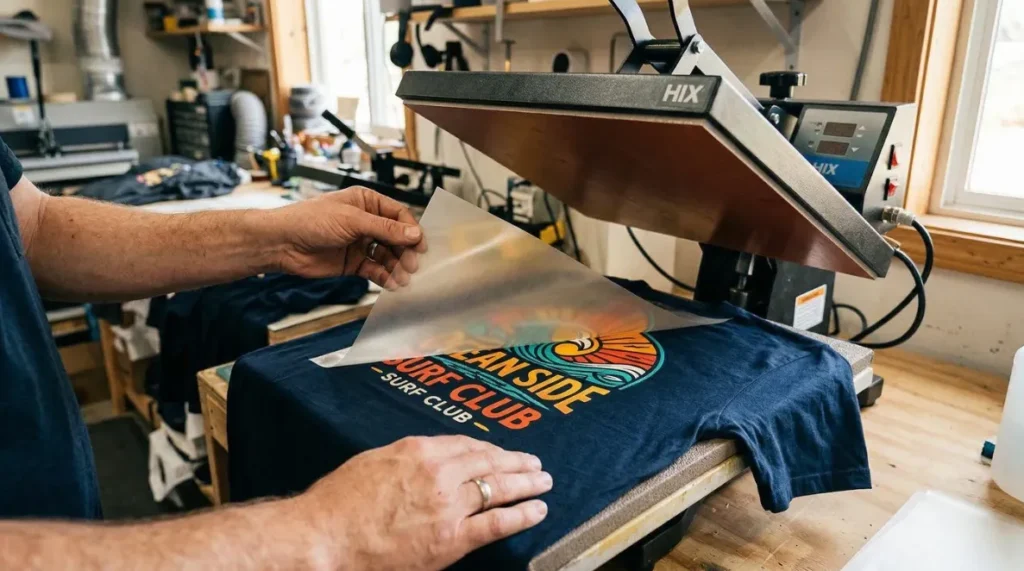
HTV is great for quick names and simple shapes, but it can become painfully slow the moment you want full-color artwork, gradients, or layered designs. If you’ve ever searched for DTF transfers near me Dallas, it’s usually because you want a cleaner way to press detailed designs without hours of cutting and weeding.
If you’ve been using HTV for custom shirts, you already know the routine — cut, weed, layer, press. It works. But if you’ve ever stared down a detailed multi-color design and thought, “There’s no way I’m cutting all that,” you’ve already met the problem that DTF was built to solve.
DTF transfers use the same heat press you already have. But the process looks completely different, and so do the results.
What Is DTF and How Is It Different From HTV?
HTV (Heat Transfer Vinyl) works by cutting shapes out of a single color sheet and layering them onto a shirt using heat. It’s ideal for bold text, simple designs and personalization — names, numbers, initials.
DTF (Direct-to-Film) transfers are a fully printed film. Your design is printed in full color onto a special PET film using ink and powder adhesive. That film is then pressed onto fabric with heat. Press it, peel it, and it’s done. No cutting. No weeding. No layering.
The core difference: HTV builds a design in layers of solid vinyl. DTF prints the entire design as one piece, including fine detail and gradients. That distinction matters a lot depending on what you’re making.
When DTF Beats HTV
DTF is the better choice when the design is complex, multi-color, or includes photo-like detail. If you’re printing a full-color logo with shading, a character illustration, or a design that would require five vinyl layers in HTV, DTF wins.
DTF also holds up well for repeated use, especially when pressed correctly. For designs that require high fidelity — like merch, client branding, or detailed artwork — DTF looks more like a professional screen print than a craft vinyl project.
Dark fabric is another area where DTF has a clear advantage. HTV works on dark fabric, but when you want complexity on black or navy the same way you do on white fabric, getting there with HTV can be slow. DTF makes full-color on dark blanks straightforward.
When HTV Still Wins
HTV still has a place, especially for personalization and one-off customizations. If you’re cutting a name and number for a jersey, doing one shirt for a birthday, or placing a single bold phrase on a shirt, HTV is fast and clean.
HTV can also be more economical when you’re doing very simple designs at low scale, particularly if you already have vinyl on hand. There are no transfer costs, no waiting on shipments, and you can cut exactly what you need.
Many crafters end up using both, depending on the project. Simple personalization? HTV. Complex full-color artwork on a dark blank? DTF every time.
How to Order DTF Transfers If You Don’t Print Your Own
Not everyone has a DTF printer — and for most crafters, you probably don’t need one. Instead, you can order ready-to-press transfers from a DTF shop, receive them, and press them at home on your existing heat press.
The file prep is straightforward: PNG format, transparent background, and 300 DPI at the print size you want. Send that file to a DTF shop, specify the dimensions, and they ship you a pressed-and-ready transfer.
Shops like DTF Dallas offer no minimum order policy, which means you can order a single transfer to test a design before committing to a batch. That’s the same test-before-you-scale approach that used to be reserved for screen printers and wholesale suppliers, now available for full-color printed designs too.
For local customers, turnaround can be same-day when artwork is approved early.
Order pickup is available 24/7 through an automated system outside of regular business hours.
For example, a small Dallas-based maker needed 15 full-color transfers for a weekend pop-up. Artwork was approved in the morning, and the transfers were ready the same day so the blanks could be pressed and packed before the event.
The shop runs production seven days a week, supporting both small-batch and higher-volume orders with fast turnaround.
If you’ve been limiting your projects to what HTV can handle, try ordering a single DTF transfer for a complex design and see what opens up on the design side. Chances are you’ll still use HTV — but you’ll use it more strategically.