
You’ve dreamed of standing beneath Everest’s towering peaks, breathing in crisp Himalayan air, and conquering the trail to Base Camp. But the truth is, while the Everest Base Camp trek is breathtaking, it’s also tough. Without the right preparation, even fit trekkers can suffer injuries that derail the adventure.
From sprained ankles to altitude sickness, the trail demands more than enthusiasm, it requires smart preparation, the right gear, and respect for your body.
In this guide, you’ll learn exactly how to prevent injuries on the Everest Base Camp trek, from training and equipment to trekking techniques and altitude safety. Whether you’re a first-timer or a seasoned hiker, these tips will help you stay strong, steady, and injury-free.
Why Injury Prevention Matters on the Everest Base Camp Trek
The EBC trek stretches over 130 kilometers (round trip) and climbs to 5,364 meters (17,500 feet). That’s a lot of distance, elevation, and strain on your joints.
Common injuries and issues include:
- Sprained ankles from rocky terrain
- Knee pain on steep descents
- Blisters from new or ill-fitting boots
- Fatigue and muscle overuse
- Altitude-related sickness
Medical care is limited in the Khumbu region, so prevention is key. A serious injury might mean an expensive helicopter evacuation. That’s why when trekking to Everest Base Camp, focusing on preparation, gear, and pacing is your best defense.
What Fitness Level You Need to Stay Injury-Free
You don’t need to be a marathon runner to trek to Base Camp, but you do need endurance and leg strength. The fitter you are before the trek, the safer, and more enjoyable, it’ll be.
Start training 8–12 weeks before your departure. Include:
- Cardio: Hiking, running, or cycling 3–5 times a week.
- Strength training: Focus on legs, glutes, and core with squats, lunges, and planks.
- Hill or stair workouts: Build climbing stamina and leg strength.
- Practice hikes: Carry your backpack during training to get used to the weight.
Tip: If you can hike 10–15 km on hilly terrain while carrying a 6–8 kg backpack comfortably, you’re ready for EBC.
Gear That Helps Prevent Trekking Injuries
Your gear can make or break your trek. The right equipment reduces strain, improves balance, and prevents blisters and falls.
Essential gear includes:
- Hiking boots: Waterproof, ankle-high, and well broken-in. Never start EBC with new boots.
- Trekking poles: Take pressure off your knees—especially on descents.
- Backpack (30–40L): Choose one with padded straps and a hip belt to distribute weight evenly.
- Layered clothing: Moisture-wicking base, insulating mid-layer, and waterproof outer shell.
- Extras: Sun hat, gloves, and UV-protective sunglasses.
Before you go, test everything on local hikes. Gear that feels fine for an hour can cause discomfort after several days on the trail.
Protecting Your Knees and Joints on Steep Trails
Descending is tougher on your body than climbing. The downhill stretches from Base Camp to Lukla can be brutal on your knees and ankles.
Try These Proven Techniques:
- Use trekking poles: Keep them slightly longer for downhill sections.
- Shorten your stride: Small, controlled steps reduce knee strain.
- Engage your core: Strong core muscles stabilize your balance and protect joints.
- Wear knee braces: Especially if you’ve had prior injuries.
Stretch regularly—especially your calves, hamstrings, and quads. Trekking eight days uphill and four days down puts stress on every muscle.
Stay hydrated and eat properly to prevent cramps and fatigue, which can lead to poor form and injury.
Preventing Altitude Sickness on the EBC Trek
Altitude sickness (AMS) is one of the most serious risks trekkers face. It can affect anyone, no matter your age or fitness.
Common symptoms include:
- Headache
- Dizziness
- Nausea or vomiting
- Fatigue
- Loss of appetite
Prevent AMS with These Steps:
- Ascend gradually: Follow an itinerary with rest days in Namche Bazaar (3,440m) and Dingboche (4,410m).
- Stay hydrated: Drink 3–4 liters of water per day.
- Eat well: Focus on high-carb meals for energy.
- Avoid alcohol and smoking: Both reduce oxygen absorption.
- Consider medication: Consult your doctor about Diamox (acetazolamide) before your trek.
Severe symptoms like confusion, chest tightness, or difficulty breathing require immediate descent and medical attention.
Altitude sickness can strike suddenly, so listen to your body and never “push through it.”
If symptoms worsen, descend immediately. For trekkers planning to extend their journey beyond Base Camp with Island Peak climbing, proper acclimatization after reaching EBC is essential to ensure a safe and successful ascent.
Trekking Techniques to Prevent Slips and Falls
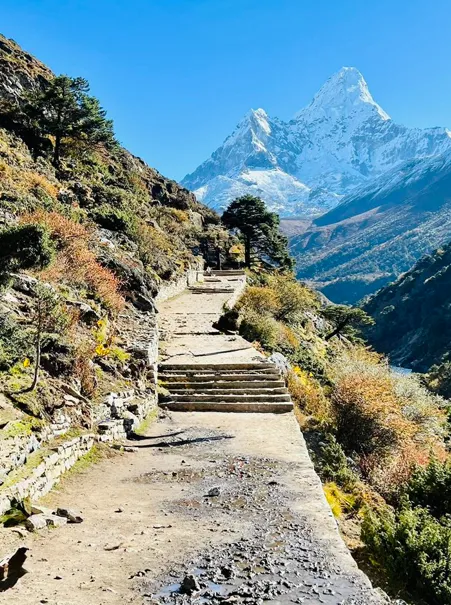
The trail to EBC can be rocky, muddy, and sometimes icy. A simple misstep can lead to a sprain or worse.
Stay safe with these tips:
- Watch where you step, especially on gravel or near streams.
- Use trekking poles for balance.
- Keep your center of gravity low when descending.
- Stop walking before taking photos.
- Check your boot soles for grip; replace worn-out ones.
Weather changes fast in the Himalayas. Trails can turn slippery in minutes, so always walk with focus and caution.
Dealing with Minor Injuries on the Trail
Even with preparation, small injuries can happen. A personal first-aid kit is a must-have.
Pack these essentials:
- Blister pads or moleskin
- Antiseptic wipes and ointment
- Bandages and gauze
- Pain relievers (like ibuprofen)
- Elastic bandages for sprains
If you get a blister, don’t ignore it. Clean it, pad it, and change socks often. For sprains, use the R.I.C.E. method—Rest, Ice, Compression, and Elevation.
Choosing a Safety-Focused Guide or Trekking Group
A good guide is your best ally on the trail. They monitor your health, set the right pace, and act fast in emergencies.
When booking, look for trekking companies that:
- Employ licensed, government-certified guides
- Train staff in first aid and altitude response
- Have a clear emergency evacuation plan
- Include acclimatization days in their itinerary
Small group sizes allow better attention and safety monitoring. Don’t hesitate to ask operators about their safety track record before booking.
When to Stop or Turn Back
The bravest trekkers are those who know when to stop. Pushing through pain or altitude symptoms is dangerous.
Stop and rest if you experience:
- Persistent headaches or dizziness
- Shortness of breath at rest
- Loss of coordination or confusion
- Sharp joint or chest pain
Communicate with your guide. Sometimes, an extra rest day is all you need to recover safely. Remember: Everest will always be there—you can come back stronger.
Final Tips for a Safe, Injury-Free EBC Trek
- Train consistently before your trek
- Break in your boots early
- Follow a slow, steady pace
- Stay hydrated and eat well
- Use trekking poles on descent
- Carry a personal first-aid kit
- Trek with experienced guides
A safe trek is a successful trek. Respect the mountain, listen to your body, and enjoy every step of your journey to Everest Base Camp.
Conclusion:
Trekking to Everest Base Camp is more than just a physical challenge, it’s a mental and emotional journey through some of the most spectacular landscapes on Earth. The adventure tests your endurance, resilience, and patience, but with the right mindset and preparation, it becomes one of the most rewarding experiences of your life.
Injury prevention isn’t just about avoiding pain; it’s about giving yourself the best chance to fully enjoy the trek. Every step, every village, every glimpse of the mountains becomes more meaningful when you feel strong, confident, and well-prepared.