
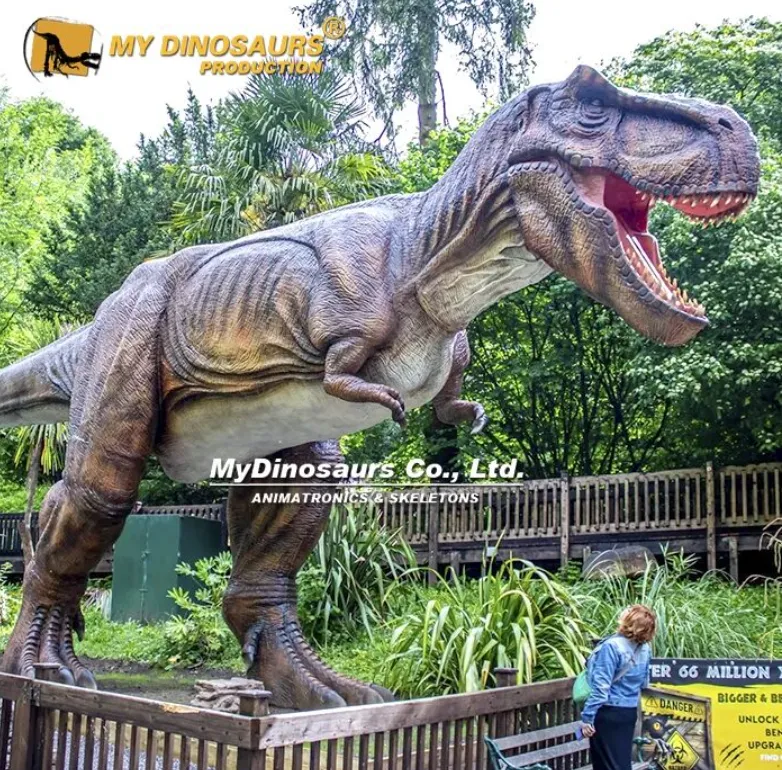
Across museums, science centers and educational parks, one type of exhibit consistently captures attention from visitors of every age. Life size prehistoric models have become powerful tools in modern learning spaces because they offer something that digital screens and textbooks alone cannot: physical immersion. In a time when educators search for ways to keep science engaging, these large scale displays have evolved into interactive learning hubs where curiosity grows naturally.
As guests encounter real life size dinosaurs in exhibitions, they gain a deeper understanding of paleontology, ancient ecosystems and scientific discovery. Scale brings prehistoric life into the present, encouraging visitors to interact with educational content in ways that are both memorable and impactful. This article explores how these displays support interactive learning and why they remain essential in museums around the world.
Why Life Size Dinosaur Displays Capture Visitor Attention
Emotional Impact Through Physical Presence
The powerful first impression created by a towering dinosaur model is one of the main reasons visitors are drawn into the learning environment. Scale has a unique ability to activate emotional responses such as awe, excitement and curiosity. These emotions set the stage for interactive learning because they increase focus and encourage deeper engagement with surrounding educational materials.
Key emotional triggers
- Realistic proportions that reflect scientific research
- The opportunity to stand beneath or beside a massive prehistoric creature
- The novelty of experiencing ancient life in a modern setting
Visual Storytelling That Enhances Learning
Large displays act as visual anchors in an educational space. They allow museums to build narrative elements around them, such as habitat scenes, fossil comparisons and behavior reconstructions. When visitors see these elements together, they gain a more complete understanding of ancient environments, predator and prey relationships and evolutionary history.
Interactive Elements That Strengthen Engagement
Hands On Learning Stations
Modern exhibitions often integrate hands on areas next to full scale models. These stations help visitors explore scientific concepts in accessible ways. Common interactive features include:
- Touch tables with replica fossils
- Texture samples that represent scales, feathers or skin
- Weight comparisons that illustrate the mass of different species
- Build a skeleton activities that teach anatomy
Hands on learning transforms passive observation into active participation, which significantly improves retention.
Digital Interactions and Augmented Reality
Technology enhances the educational potential of real life size dinosaurs by expanding the ways visitors can explore them. Interactive screens, AR apps and digital kiosks allow guests to:
- Rotate skeletal diagrams
- Watch reconstructions of movement
- Explore muscular and internal structures
- Learn about the excavation and research process
When combined with a physical model, these digital features create a multidimensional learning experience.
Audio and Environmental Effects
Soundscapes and lighting help recreate the atmosphere of prehistoric eras. Carefully placed audio cues can demonstrate vocalizations or environmental sounds, while lighting effects draw attention to anatomical details. These additions support contextual learning and help visitors imagine how dinosaurs behaved in their habitats.
Educational Themes Supported by Life Size Dinosaur Exhibits
Understanding Anatomy Through Scale
Life size displays serve as a bridge between fossil remains and reconstructed creatures. Visitors can study body structure, locomotion and physical adaptations in accurate proportions. This supports lessons in:
- Evolution
- Biomechanics
- Predator and prey adaptations
- Growth stages and species variation
A large model can make complex anatomical concepts easier to understand because learners can view the entire organism at once.
Learning About Ancient Ecosystems
Many exhibits include dioramas or environmental backgrounds that illustrate habitats such as forests, floodplains or coastal regions. These visual ecosystems teach visitors how prehistoric life interacted with climate, geography and vegetation. This approach supports interdisciplinary learning, connecting paleontology with geology, climate science and ecology.
Exploring the Science of Fossil Discovery
Interactive exhibits often highlight the scientific process behind paleontology. Visitors may learn:
- How fossils form
- How excavations work
- How scientists determine size and posture
- How research evolves over time
By linking real life size dinosaurs to the methods used by scientists, museums help guests appreciate the ongoing nature of discovery.
How Interactive Learning Benefits Different Age Groups
Children: Building Early Scientific Curiosity
Young learners respond strongly to large visual stimuli. Life size dinosaurs encourage them to:
- Ask questions
- Explore independently
- Participate in guided learning activities
Interactive stations designed for children can help develop early STEM interest.
Teens: Connecting Concepts to Real World Science
Teenagers benefit from exhibits that challenge them to think critically. Digital tools, augmented reality and detailed scientific information allow them to engage more deeply with complex topics such as evolution, geology and climate patterns.
Adults: Enjoying Informal Learning Experiences
Adults often visit museums for enjoyment, but interactive exhibits give them meaningful opportunities to learn at their own pace. The combination of visual immersion and educational content encourages adults to read more, explore more and discuss what they discover.
Design Principles Behind Successful Dinosaur Exhibits
Accuracy Supported by Scientific Research
Life size displays must reflect current paleontological understanding. Designers rely on fossil measurements, scientific publications and expert review to ensure models are anatomically correct.
Accurate details include:
- Skeletal proportions
- Limb movement potential
- Skin or feather texture
- Posture and stance
Durability and Safety
Because visitors interact closely with these large models, materials must be durable and safe. Fiberglass, steel framing and reinforced polymers are commonly used to support weight and prevent damage.
Accessibility Considerations
Interactive dinosaur exhibits serve diverse audiences. Effective design ensures:
- Clear sightlines for children and wheelchair users
- Simple language for general audiences
- Multilingual signage when appropriate
Accessibility helps make learning inclusive and engaging.
Comparing Static Displays and Interactive Exhibits
| Feature | Static Life Size Display | Interactive Learning Exhibit |
| Visitor Engagement | High visual impact | Sustained engagement through activities |
| Educational Depth | Moderate | High, with layered content |
| Technology Use | None or minimal | Digital screens, AR, audio |
| Learning Style Compatibility | Visual learners | Visual, auditory and kinesthetic learners |
| Ideal For | Large gallery spaces | Educational programs and families |
This comparison shows that while static displays remain impressive, interactive installations provide broader learning opportunities.
Why Real Life Size Dinosaurs Remain Essential in Museums
A Central Feature for Educational Programming
Teachers and museum educators frequently use these exhibits as focal points for lessons. Life size dinosaurs support curriculum topics such as adaptation, extinction events and scientific methodology.
High Visitor Retention and Positive Feedback
Museums consistently report that dinosaur exhibits attract large crowds and encourage repeat visits. Families and school groups seek experiences that are both educational and entertaining. Large prehistoric models satisfy both needs, making them long term assets for institutions.
Versatility Across Museum Themes
Although typically associated with natural history, life size displays can support themes in:
- Art and sculpture
- Engineering and mechanics
- Film and storytelling
- Environmental science
Their versatility allows museums to design creative programs that appeal to varied audiences.
Conclusion
Interactive learning environments built around life size dinosaur displays continue to shape the way museums educate and inspire visitors. These massive reconstructions transform prehistoric creatures into accessible, engaging teaching tools. Whether through hands-on activities, digital enhancements or scientific storytelling, they offer unique opportunities for visitors to learn about ancient life in ways that feel vivid and unforgettable.
As technology evolves and public interest in immersive experiences grows, real life size dinosaurs will remain central to museum education. They capture attention, spark curiosity and create lasting memories, making them some of the most valuable assets in modern exhibition design.