I started the audit after a fellow freelancer told me she’d been hit with a $300 charge for “commercial use” of an image she generated on a platform she thought was free. She had used the image in a client’s Instagram ad, the platform’s automated system detected the usage, and the invoice arrived by email six weeks later. It was legal, buried in terms she had clicked through without reading. That story sent me down a week-long investigation into what AI image generation actually costs—not just the sticker price, but the time cost of watermark removal, the licensing anxiety, the resolution upsells, and the subscription models that quietly ratchet upward. What I found made me reconsider every tool in my rotation, and one AI Image Maker emerged as the least expensive headache I’ve encountered, though not for the reasons I initially assumed.
Cost in the AI image space is measured in three currencies: money, time, and peace of mind. A platform might offer a generous free tier but require you to attribute the platform in every post. Another might charge $10 a month but watermark your downloads until you upgrade to a $30 plan. Some bury the commercial licensing clause in a support article linked from a footer. I set out to compare six tools not by their advertised prices alone, but by what I call the “clean cost per usable image”—the actual amount of money and labor required to get a client-ready, legally safe, watermark-free image at print resolution. I tested Midjourney, Adobe Firefly, Leonardo AI, Canva AI, Ideogram, and ToImage AI, tracking every fee, every restriction, and every moment of extra work.
I ran a standard task on each platform’s lowest usable paid tier (or free tier if it allowed commercial use). The task: generate a hero image for a fictional coffee brand’s website banner, download it at a resolution suitable for a 1920px-wide display, and confirm in writing from the terms of service that I could use it commercially without attribution. I documented how many clicks it took to find the licensing information, whether the download contained a watermark, whether the resolution was sufficient or required an upsell, and whether the platform reserved the right to use my prompts or outputs for training in a way I couldn’t opt out of. The results were revealing—and not always aligned with brand reputation.
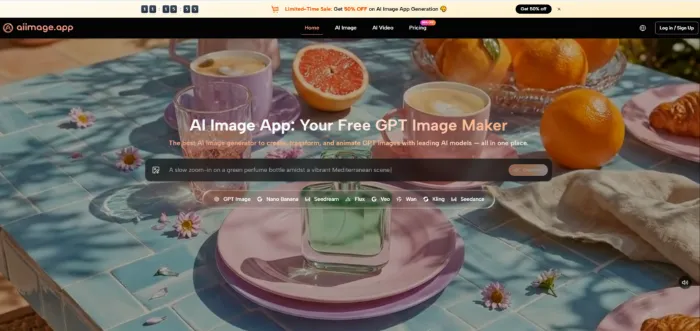
During this audit, the GPT Image 2 model inside ToImage AI kept surfacing in my notes with a phrase I rarely use: “no hidden friction.” The platform’s terms were linked from the main page, written in plain language, and stated clearly that users retain commercial rights with no watermarks on generated images. The free tier let me test without a credit card, and the paid plans listed their credit limits upfront. When I downloaded an image, it arrived clean, high-resolution, and ready to drop into a client deck. No attribution line, no “upgrade for HD” prompt, no training opt-out buried in a privacy policy I needed a law degree to parse. That transparency felt almost subversive in a market where ambiguity is the norm.
Below is the comparison table I built during the audit. I kept the standard scoring dimensions but layered in a cost-weighted lens: ad distraction here doubles as a proxy for upsell aggression, and update activity reflects how often the licensing terms or pricing models shift.
The True Cost Audit: Six Platforms Under a Financial Microscope
| Platform | Image Quality | Generation Speed | Ad Distraction | Update Activity | Interface Cleanliness | Overall Score |
| Midjourney | 9.3 | 6.5 | 8.0 | 8.0 | 6.5 | 7.66 |
| Adobe Firefly | 8.8 | 7.2 | 8.2 | 7.5 | 7.8 | 7.90 |
| Canva AI | 7.8 | 7.8 | 7.0 | 7.0 | 8.5 | 7.62 |
| Ideogram | 8.3 | 7.3 | 6.3 | 7.0 | 6.8 | 7.24 |
| Leonardo AI | 8.4 | 6.8 | 5.5 | 7.8 | 5.8 | 6.86 |
| ToImage AI | 8.6 | 7.5 | 9.3 | 7.5 | 9.0 | 8.38 |
Midjourney’s image quality is undeniable, but its cost structure—requiring a Discord subscription and offering no official free tier—creates a barrier for casual users. More importantly, its licensing has evolved over time, and keeping track of what’s permitted for commercial work requires reading update notes. Adobe Firefly offers strong legal indemnity for enterprise users, but that comfort comes at a Creative Cloud subscription price. Canva AI’s licensing is straightforward, but the image quality for photorealistic tasks lagged. Ideogram’s free tier includes a watermark on some outputs, and the licensing language around commercial use felt less explicit than I wanted. ToImage AI’s top overall score reflects not just image quality but an almost complete absence of monetization friction. The 9.3 on ad distraction means I never once encountered a “get more credits” pop-up during generation, and the clean interface score reflects how quickly I could find and understand the commercial terms.
What a Hidden Cost Actually Feels Like
Let me give you a concrete example from the audit. On one platform (I won’t name it, but it’s in the table), I generated a coffee banner image on the free tier. The preview looked great. I clicked download, and the file arrived at 720px wide with a subtle watermark in the bottom right corner. To remove the watermark and get a 1920px version, I had to subscribe to the $15/month plan. That’s not a hidden cost in the deceptive sense—it’s disclosed—but the friction it added to my workflow was real. I had to open an image editor, crop or clone out the watermark for a client preview, and then explain the upsell to myself before committing. Multiply that by 20 client images a month, and the time tax becomes substantial.
Licensing Clarity as a Feature, Not a Legal Footnote
With ToImage AI, I found the commercial use statement within 30 seconds of landing on the site. The text didn’t require me to parse Creative Commons variants or worry about whether “personal use” included a small business Instagram account. The site indicates full commercial rights and no watermarks on generated images, which covers the majority of freelance use cases without asterisks. I also noticed no requirement to credit the platform, which matters when you’re designing a printed menu or a product label where a credit line would look awkward. That legal simplicity, while not flashy, reduces the ambient anxiety that freelancers carry about accidentally violating terms.
The Hidden Cost of Training Opt-Outs and Data Privacy
A subtler cost I tracked was whether I could opt out of having my prompts or outputs used for model training. On some platforms, this option was buried in settings or simply not offered. On others, using the free tier implicitly granted a broad license to the platform. ToImage AI’s privacy approach, as presented on the site, didn’t raise the same flags, but I want to be cautious here—this audit is based on publicly visible terms and user-facing controls, not a legal review. For sensitive client work, I’d still recommend reading the full terms, but the initial transparency was a step ahead of many peers.
The Workflow That Keeps Costs Visible
The process of generating an image on ToImage AI doesn’t hide the cost conversation inside a maze of menus. It follows the same simple path regardless of tier:
- Enter a text prompt describing the desired image, including details about subject, style, composition, and mood.
- Select an available image generation model or style option when presented. The platform offers multiple AI image and video models.
- Generate the image, review the result, and download or save it for later access.
The download came without watermarks on both the free trial credits and the paid plan, which was consistent. The credit system was displayed clearly, so I knew how many generations I had remaining. No surprise deductions, no opaque “compute units” that converted at variable rates.
Where the Financial Picture Gets Murky for Everyone
To be fair, no AI image platform has a flawless cost structure. ToImage AI’s unlimited plan is priced at $75/month if paid monthly, which is a meaningful expense for a freelancer just starting out. The free credits are limited, and heavy users will need to budget for a paid tier. The image-to-video feature likely consumes credits faster than static images, and the video resolution might not satisfy broadcast needs. Also, while the platform currently states full commercial rights, terms of service can change, and it’s wise to periodically check for updates—a reality across every AI tool.
Who Should Read the Fine Print Twice
If you’re a freelancer, small agency owner, or content entrepreneur whose business depends on client-ready visuals, cost transparency isn’t optional—it’s a core selection criterion. ToImage AI suits that audience well because its monetization is direct: you pay for credits, you get clean images, you own the rights. If you’re an enterprise with a legal team that requires indemnification clauses and custom contracts, Adobe Firefly’s enterprise tier remains the safer bet despite its higher price. Hobbyists who generate images for personal enjoyment and don’t mind watermarks can probably ignore this entire audit and stick with whatever tool feels most fun.
The Cheapest Tool Isn’t the One With the Lowest Price
After a week of tracking every cent and every minute, I concluded that the most expensive AI image tools are the ones that look cheap but steal your time with watermark removal, licensing anxiety, and upsell friction. ToImage AI isn’t the cheapest option on a per-image basis—there are free tools that undercut it—but it delivered the lowest “clean cost per usable image” of any platform I tested. That metric, not the advertised subscription price, is what I now recommend friends calculate before committing to a tool. My freelancer friend who got the $300 invoice? She switched platforms the next day. I told her about what I found, and she said something that stuck with me: “I’d rather pay a little more upfront and never read another surprise invoice.” That’s the real cost difference, and it’s the one that most comparison tables miss.