
Newer homes often feel like they should be easy to heat and cool, yet many owners still deal with hot rooms, cold corners, and sticky indoor air. A common reason is that system sizing does not match the house’s actual load. When equipment is oversized, it can cycle quickly, fail to remove humidity, and produce noisy bursts of airflow. When it is undersized, it may run nonstop and still fall behind during heat waves. Sizing also affects duct pressure, filter life, and component lifespan. Knowing common mistakes helps homeowners ask better questions and avoid costly do-overs.
How sizing goes wrong
- Sizing shortcuts that miss real loads
Sizing errors often begin with shortcuts during design or construction. A plan may be reused from a previous project and then altered to include larger windows, taller ceilings, or an open stairwell that changes how air moves. Orientation matters, too, because west-facing glass can add late-day heat, while shaded rooms need less cooling. Ventilation choices also affect the load, since a tight house with fresh-air equipment may require a different capacity than a drafty one. Square footage rules ignore room conditions and can push tonnage higher than necessary. A clue is when discomfort appears only in sun-exposed zones, even though the thermostat reads fine. Homeowners calling Reliable AC Repair Service in Tuscumbia can ask whether a load calculation was done for this build. A proper calculation accounts for insulation, window type, shading, and occupancy, so capacity matches reality. It also guides equipment selection and prevents guesswork during replacement decisions.
- Duct limits that look like sizing problems
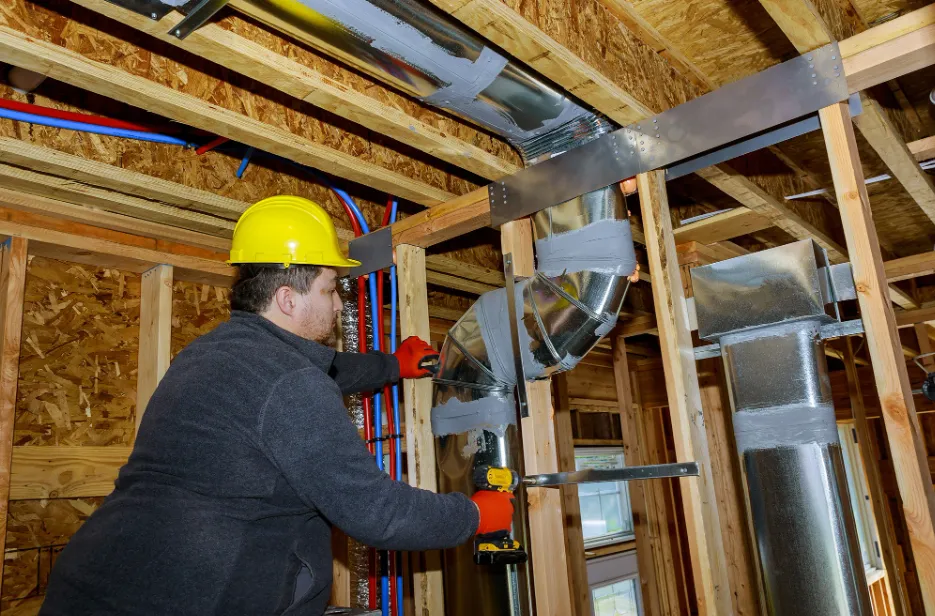
Even with equipment size, duct design can make a new home feel poorly conditioned. Undersized trunks, long flex runs, and sharp turns raise static pressure, so the blower cannot deliver the airflow the coil needs. Low airflow reduces heat transfer, increases noise, and can cause short cycles that appear to be oversizing. Return air is another frequent issue. If bedrooms have supplies but no clear return path, closed doors create pressure, starving the system and pulling air from leaks. That leads to dusty rooms, temperature swings, and whistling grilles. Zoning systems can add complexity when dampers are sized without enough bypass or when one zone is too small for the minimum airflow the equipment requires. A simple commissioning step is to measure the external static pressure and compare it to the air handler rating. When pressure is high, the fix may be larger returns, balancing, or duct modifications, not a bigger unit.
- Oversizing in efficient homes and humidity
Oversizing is especially common in efficient envelopes because sensible load drops faster than many people expect. Better insulation and air sealing reduce peak heat gain, yet humidity still enters from people, cooking, showers, and outdoor air that leaks in or is intentionally introduced. A large system can reach the set temperature quickly and shut off before it runs long enough to remove moisture. Over time, the house may feel clammy, and occupants may lower the thermostat to feel dry, increasing energy use. Short cycles also increase wear on compressors and contactors and can create uneven mixing, with one level comfortable and another stale. Variable-speed equipment can help, but only if airflow and controls are set correctly, and the unit is not oversized. In humid climates, a sizing conversation should include latent load, ventilation rate, and whether a dedicated dehumidifier is needed for milder seasons. These details get overlooked.
- What to ask when comfort is off
Sizing mistakes reveal themselves through patterns. Watch for frequent starts and stops, big temperature swings, and a damp feeling that persists even on mild days. Notice whether certain rooms lag during late-afternoon sun or during the morning warm-up, because timing points to load drivers. Check filter loading and listen for airflow, since loud returns and weak supplies can indicate high static pressure. When hiring a service, request more than refrigerant checks. Ask for a written load calculation, an airflow test, and static pressure readings, then compare results to the equipment data plate. Confirm that the outdoor unit, indoor coil, and blower are a matched combination approved by the manufacturer. If the home has fresh air equipment, confirm how it is controlled and whether it runs continuously. The goal is to fix the system, not to chase symptoms with oversized replacements. Document results so future replacements follow the same verified baseline.
Next comfort steps
Sizing mistakes still show up in newer homes because rules of thumb, plan changes, and duct constraints slip past final checks. A system that is too large can short-cycle, leave humidity behind, and create noise, while a system that is too small can run nonstop and still fall short on peak days. Duct pressure and return design can mimic equipment problems and lead to wrong replacements. Homeowners get better outcomes by requesting load calculations, airflow testing, and documented static pressure readings. When sizing and ducts match the house, comfort improves, energy use becomes steadier, and equipment lasts longer overall.