Trees and underground utilities often share the same space, creating planning and safety challenges during pruning, removal, and stump work. Buried lines can include gas, electric, water, sewer, irrigation, and communication cables, and many are closer to the surface than homeowners realize. A routine project can become risky if roots are pulled the wrong way, a stump grinder strikes a shallow line, or heavy equipment compacts soil above a service trench. The goal of responsible tree work is to protect people, prevent service outages, and avoid expensive repairs while still completing the job cleanly. When tree services are coordinated with utility awareness, crews can choose safer access routes, adjust cutting plans, and control debris without disturbing critical underground infrastructure.
Safe steps around buried lines
- Planning starts with locating and mapping.
The first phase is not cutting; it is confirming what is underground and where. Professional crews plan around utility corridors, service laterals, and private lines that may not be obvious. Marking locations helps crews decide where equipment can travel, where rigging anchors can go, and whether a stump should be ground or cut flush and left. Mapping also highlights areas where roots may have grown around pipes and conduits, which changes how sections are removed. Crews often adjust drop zones and rigging angles so logs do not swing across marked areas or land with enough impact to crush shallow lines. A thoughtful plan also considers soil conditions. Saturated soil is easier to rut and compact, which can stress buried pipes and create low spots that collect water. In properties with complex landscaping, planners identify irrigation zones and shallow lighting cables, which are commonly hit during stump work. Homeowners can support the plan by pointing out known line routes, past repairs, and where sprinklers and outdoor outlets run, because private lines may not be included in general marking programs. When everyone treats the underground layout as a jobsite map, the work becomes far more controlled.
- Cutting and rigging methods that reduce ground disturbance
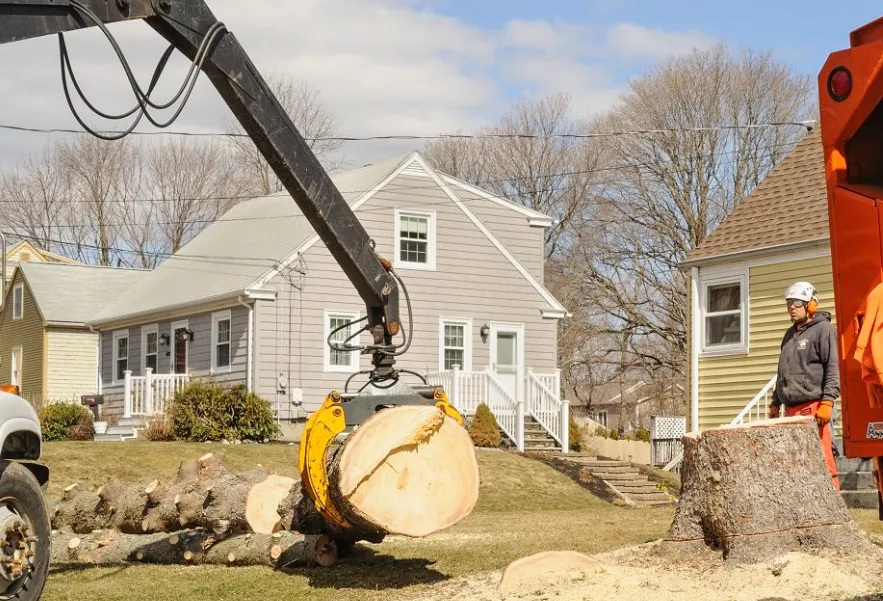
Once the utility layout is understood, tree work methods change to reduce ground pressure and avoid tearing forces. When a tree is removed near buried lines, crews often dismantle it in smaller pieces rather than dropping large sections. Rigging allows controlled lowering so that wood does not slam into the ground, which can transmit shock to the soil above utilities. Crew leaders may set up mats or protective ground coverings to spread equipment weight and reduce ruts. They may also limit machine travel to established paths and keep outriggers off marked corridors. When roots have entwined with shallow utilities, pulling or yanking is avoided because it can shift or crack lines. Instead, crews cut roots in a controlled way and remove sections gradually. This is especially relevant for tree-cutting services that use trucks, loaders, or cranes, because the temptation to use force is high when time is tight. Controlled dismantling protects lines while also reducing the chance of sudden branch swings that could damage above-ground service boxes and meters. The result is slower, more deliberate work that lowers the risk of outages and repairs.
- Stump grinding and root work around utilities
Stump grinding is one of the highest-risk phases on utility-heavy properties because grinders reach below grade and can contact shallow cables or pipes. A careful approach begins with setting safe grind boundaries based on marked utilities and known private line routes. Crews may choose a shallower grind depth in utility zones and remove the remaining stump wood manually rather than pushing deeper. They may also adjust the grind direction so debris is thrown away from meters, valve boxes, and vent pipes. Root cutting requires similar caution. Large structural roots can extend toward utility trenches where the soil is looser and easier for roots to penetrate. Cutting those roots abruptly can destabilize remaining trees or create settling voids that affect nearby slabs and line bedding. For that reason, crews sometimes recommend staged root reduction, soil backfill, and monitoring rather than aggressive removal. If a stump sits directly above a utility corridor, an alternative is to cut the stump near grade, cover it with soil, and shift the planting plan to avoid the area. While this may not satisfy every landscaping goal immediately, it often prevents much larger repair costs and safety hazards.
Safer Tree Work Near Lines
Tree services on properties with underground utilities require more than careful cutting. They require planning that starts with locating and mapping lines, then choosing dismantling, rigging, and equipment routes that reduce soil disturbance. Controlled lowering and limited machine pressure help protect shallow pipes and cables from impact and compaction. Stump grinding and root work require extra caution because they operate below grade, where many utilities are located. Clear communication, visible markings, and documented work zones keep surprises to a minimum. With a utility-aware approach, tree projects can be completed smoothly while reducing the risk of outages, property damage, and costly repairs.