
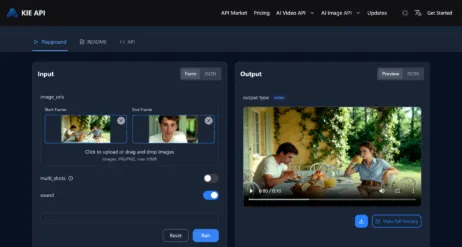
The evolution of digital media is shifting the focus for creative agencies from manual frame-by-frame animation toward a programmable media infrastructure. For developer teams looking to industrialize the production of high-fidelity visual assets—specifically those representing intricate handmade crafts—the Kling 3.0 API offers a robust, code-driven framework to synthesize movement with professional-grade precision. By integrating video generation as a standardized service, technical teams can move beyond individual experimentation and toward a scalable pipeline that prioritizes visual coherence and structural integrity.
Transitioning to API-Driven Animation Workflows for Craft Teams
For production squads managing the digital presence of craft-based brands, the bottleneck of high-quality animation has historically been the manual labor involved in traditional editing and rendering. Shifting from standalone creative tools to an integrated, code-driven animation environment allows teams to treat video as a data output rather than a manual project.
- Implementing video synthesis as an asynchronous service within a developer-managed stack significantly reduces operational latency.
- Technical teams can now scale content throughput to support high-volume digital platforms for handmade goods through automated requests to the Kling 3 API.
- Moving production to an API-first approach ensures that creative assets can be generated, updated, and localized without the need for a dedicated designer for every iteration.
By utilizing the Kling AI 3.0 API, teams can carve out a more efficient “thread of continuity” in their production schedule, ensuring that large-scale campaigns for artisanal products are delivered with technical precision.
Technical Precision in Kling AI 3.0: 4K Fidelity for Intricate Craft Textures
When animating handmade items—whether they are textiles, ceramics, or woodcrafts—maintaining the integrity of the physical texture is paramount. The architecture behind the Kling AI 3.0 API addresses this by prioritizing the physics of light and motion.
Unified Multimodal Architecture
The Kling 3.0 API framework utilizes a system that simultaneously processes lighting, physics, and motion. For developer teams, this means the interface understands how light should realistically interact with a yarn’s surface or a clay’s glaze as the object moves in a 3D space. This unified approach ensures that the “handmade” feel—the tactile quality of the craft—is not lost in translation to a digital format.
Native 4K Rendering via the Kling Video 3.0 API
A significant differentiator for the Kling Video 3.0 API is its ability to generate high-density pixels directly from the initial synthesis stage.
- Native 4K rendering preserves structural integrity without the artifacts typically found in post-generation upscaling.
- Maintaining high-resolution output is a core requirement for professional craft brands where visual quality is non-negotiable.
- Generating 4K assets programmatically allows for a seamless transition from the developer’s environment to broadcast-quality digital displays.
Precise Detail Stability in Artisanal Media
In commercial-grade animation of handmade products, the stability of fine details is a technical necessity. The Kling AI 3.0 API has refined its ability to keep intricate textures and brand labels sharp across every frame, even during complex camera movements that showcase a craft from multiple angles.
Achieving Subject Consistency via Kling V3.0 API
One of the primary challenges in automated animation is “identity drift” across different generation cycles. The Kling V3.0 API provides specific logic to mitigate this risk for team-based projects.
Identity Locking for Project Continuity
Utilizing the Kling V3.0 API’s subject reference logic allows developers to programmatically define and maintain the physical attributes of a handmade subject.
- Teams can lock the specific features of a handmade character or product across multiple API requests.
- This ensures that a “needle-felted mascot” or a “hand-carved product” remains visually identical throughout an entire series of automated videos.
- Implementing robust identity-locking parameters directly within the API request payload standardizes the output across the entire team’s workflow.
Preventing Visual Discrepancies in Craft Tutorials
By using the Kling V3.0 API, organizations can significantly reduce the need for manual retakes. When the subject identity is locked through code, the risk of visual inconsistencies between different DIY steps is minimized, allowing the development team to focus on narrative flow rather than clip-by-clip quality control.
Complex Scene Control for Team-Based DIY Production
The Kling Video 3.0 API offers advanced parameterization for camera movement and character interaction, moving beyond simple text-to-video prompts.
Intelligent Multi-Shot Cinematic Storytelling
Developers can define complex camera dynamics—such as pans, tilts, and zooms—through specific API parameters. This allows a team to simulate professional cinematography through code, establishing a narrative flow that feels intentional and visually structured, perfect for showcasing the step-by-step process of a handmade creation.
Multi-Character Dialogue and Interaction
Managing sophisticated interactions is a core feature of the Kling AI API architecture.
- The API handles scenarios involving three or more characters speaking simultaneously with high synchronization.
- Teams can programmatically manage spatial mapping to ensure that handmade “puppet” characters maintain correct positioning relative to each other during dialogue.
- Native lip-sync integration allows developers to synchronize character movements with localized audio tracks across multiple languages, facilitating global reach for craft tutorials.
Developer Strategies for Integration and Optimization
Successfully deploying the Kling 3.0 API in an enterprise environment requires a structured approach to resource management and workflow orchestration.
Managing Concurrency and API Rate Limits
High-throughput production requires a robust queueing system to manage concurrent generation requests without exceeding API rate limits. Developer teams should implement error-handling logic that accounts for status codes and provides exponential backoff strategies to ensure continuous operation for large-scale craft content libraries.
Asynchronous Result Retrieval via Task IDs
Because 4K video synthesis is a compute-intensive process, the integration must utilize asynchronous patterns.
- The API returns a task ID upon submission of a request.
- Developers should build polling mechanisms or webhook listeners to monitor the status of these IDs.
- This asynchronous workflow keeps the main application responsive while the backend engine manages the visual synthesis of handmade assets.
Parameter Standardization for Craft Aesthetics
Standardizing the structure of prompt inputs and motion vectors ensures a high success rate across thousands of automated tasks. Teams should create a library of prompt templates that have been technically validated to capture specific artisanal styles, ensuring a uniform cinematic aesthetic across all generated handmade assets.
Conclusion: Industrializing Creative Narratives with Kling AI API
Integrating a programmable infrastructure via the Kling 3.0 API allows organizations to align their production capabilities with the rapid pace of global market demands. By standardizing high-fidelity output and automating complex character management, development teams can ensure that technical precision remains a core component of their visual strategy for handmade goods.
The shift toward the Kling AI API provides the necessary leverage for agencies and technical squads to bypass traditional production bottlenecks. By focusing on the details of implementation—from managing asynchronous callbacks to optimizing subject reference logic—teams can build a sustainable, high-quality media pipeline that brings handmade creations to life with digital precision.