
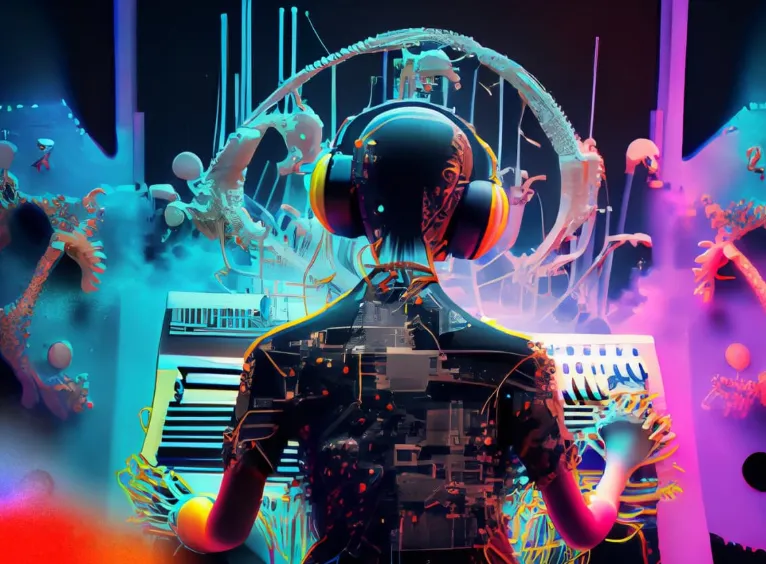
Not long ago, creating a song required at least some combination of musical training, expensive software, studio equipment, or collaboration with skilled producers. Today, things look very different. With the emergence of the AI Song Maker, the barrier to entry has dropped dramatically, opening the door for curious beginners, content creators, indie developers, and even seasoned musicians who just want to experiment.
But beyond the novelty, what does this shift actually mean? Is AI replacing musicians? Or is it quietly becoming another creative instrument — like the synthesizer once was?
Let’s unpack what’s really happening.
From Instruments to Algorithms
Music creation has always evolved alongside technology.
- Acoustic instruments → Electric guitars
- Tape recording → Digital audio workstations (DAWs)
- Drum machines → Software plugins
AI-generated music feels like the next step in this lineage rather than a sudden rupture. Instead of manually programming notes or playing melodies, creators can now describe moods, genres, or themes and receive fully structured musical output.
Want “a dreamy lo-fi beat with soft piano and vinyl texture”?
Or “an energetic electronic intro for a YouTube video”?
AI tools can interpret those prompts and generate surprisingly coherent results.
What’s fascinating isn’t just that the music exists — it’s how quickly it appears. Seconds, not hours.
Why People Are Drawn to AI Song Tools
The appeal of AI music generators isn’t limited to one type of user. Different groups find value for different reasons.
1. Beginners Without Musical Training
Many people love music but feel intimidated by theory, composition, or production workflows. AI lowers that psychological hurdle. You don’t need to know chord progressions to explore ideas.
It becomes less “Can I make music?” and more “What if I try?”
2. Content Creators
Video creators, streamers, and social media storytellers constantly need background music. Traditional licensing can be expensive, restrictive, or time-consuming.
AI-generated tracks offer a fast way to create custom moods that match specific content — without endlessly scrolling through stock libraries.
3. Musicians & Producers
Surprisingly, many trained artists use AI not as a replacement but as a sketchpad.
- Generating rough ideas
- Exploring unusual genre blends
- Breaking creative blocks
Think of it as a collaborator that never sleeps and doesn’t run out of suggestions.
4. Developers & Indie Builders
Game developers and app creators often need adaptive or procedural audio. AI opens interesting possibilities for generating music that changes based on gameplay or user behavior.
Is AI Music “Real” Creativity?
This question comes up constantly.
Some argue creativity requires human emotion, lived experience, and intention. Others point out that creativity has always involved tools, systems, and recombination.
AI models learn from vast musical patterns. They don’t “feel,” but they can generate structures that humans perceive as expressive.
A useful way to think about it:
AI doesn’t experience creativity.
Humans experience creativity through AI.
If a creator uses an AI tool to express an idea, evoke a feeling, or build a story — is that fundamentally different from using a synthesizer preset or sample pack?
The debate is ongoing, but the practical use keeps growing regardless.
The Unexpected Benefits
Beyond convenience, AI song makers are introducing some subtle but important shifts.
Creative Confidence
People who never saw themselves as “musical” begin experimenting. Curiosity replaces hesitation.
Rapid Prototyping
Instead of spending hours building a demo, creators can test multiple musical directions quickly.
Genre Exploration
AI doesn’t carry genre biases the way humans sometimes do. It happily blends classical strings with trap drums or ambient pads with folk guitar.
Accessibility
For users with physical limitations that make traditional instruments difficult, AI becomes a new avenue for musical expression.
The Limitations Nobody Talks About Enough
Despite the excitement, AI music tools aren’t magic.
1. Emotional Nuance
AI can mimic style, but subtle emotional storytelling — especially over longer compositions — may still feel generic or repetitive.
2. Originality Concerns
Because models learn from existing music, questions arise about uniqueness, influence, and potential stylistic overlap.
3. Control Depth
Professional producers often want granular control over arrangement, dynamics, sound design, and mixing. AI tools may feel restrictive in comparison.
4. Over-Reliance
If creators lean too heavily on automation, they might skip learning foundational skills that deepen long-term creativity.
AI as Instrument, Not Replacement
History suggests that new creative technologies rarely eliminate older ones — they expand the palette.
Photography didn’t kill painting.
Synthesizers didn’t end acoustic music.
Digital art didn’t erase traditional illustration.
Similarly, AI song makers are more likely to reshape workflows than replace human musicians entirely.
Human strengths remain distinct:
- Deep emotional storytelling
- Cultural context
- Live performance
- Personal artistic identity
AI excels at speed, variation, and pattern synthesis.
Together, they form a hybrid creative space.
Where This Might Be Headed
While predicting technology is risky, a few trajectories seem plausible:
Personalized Soundtracks
Music generated dynamically for individuals based on mood, activity, or environment.
Interactive Music Experiences
Songs that adapt in real time to listener input or narrative choices.
AI-Assisted Composition
Tools that act more like intelligent co-writers than simple generators.
Ethical & Legal Frameworks
Clearer guidelines around training data, ownership, and attribution.
The Human Question Beneath the Technology
Perhaps the most interesting aspect isn’t technical at all.
AI song makers raise a deeper question:
If anyone can generate music instantly,
What becomes valuable in music creation?
Possibilities include:
- Authentic human perspective
- Live interpretation
- Story behind the song
- Unique sonic identity
When creation becomes easier, meaning becomes more important.
Final Thoughts
The AI Song Maker isn’t just a novelty tool or productivity hack. It represents a shift in how people relate to music itself — from something made only by trained specialists to something increasingly participatory.