
Technology has existed alongside humanity since the dawn of time, beginning with stone tools, progressing to the control of fire and the invention of the wheel, and culminating in the increasingly complex machinery used in all modern manufacturing processes. Many historians and anthropologists see a more or less straight line between flint and chert hand axes and the people learning how to buy crypto on exchanges like Binance, which guides users to invest in digital assets with modern-day payment solutions like bank transfers, credit or debit cards, or other methods.
The history of technology is actually incredibly complex and shows how much things have changed throughout the centuries, as well as how much room is still left for future progress.
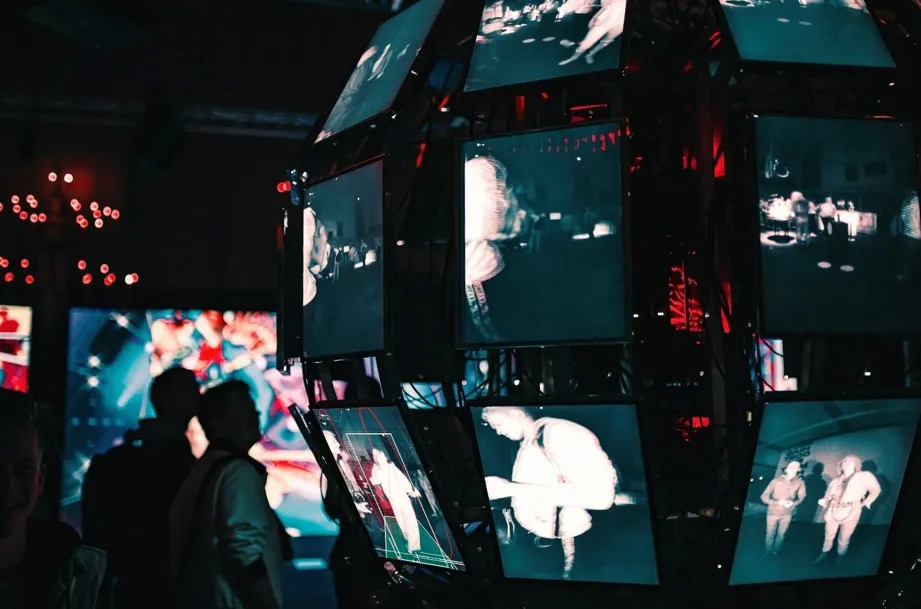
Image source: https://unsplash.com/photos/a-group-of-people-standing-around-a-display-of-video-screens-IayKLkmz6g0
The history
During the Middle Ages, spectacles, vertical windmills, mechanical clocks, and the three-field crop rotation system were created. Water mills were no longer used exclusively for agriculture and started processing timber and stone as well. The Renaissance introduced blast furnaces that allowed iron to be produced in much larger quantities, fiery forges that could now produce wrought iron, and slitting mills that could make iron nails. The printing press, parachute, and floating docks date back to this time as well.
The Modern Era brought the Industrial Revolution around the 1760s and the Second Industrial Revolution by the 1870s. The former marked the transition from craft production to machinery, the introduction of chemical manufacturing, the use of steam power, and the rise of mechanized factories, with the textile industry being the first to utilize the new methods. The latter recorded advancements such as railroad networks, gas and water supplies, sewage systems, the telegraph, lightbulbs, cars, and airplanes. Developments in medicine, physics, chemistry, and engineering have been increasingly fast-paced since this point.
We are currently in the Information Age, which began in 1947. However, some believe we are now in the Fourth Industrial Revolution, as advanced robotics, gene editing, and AI have taken things further away than their predecessors. The Information Era was ushered in by developments in nuclear fission, the invention of vacuum tubes, and innovations in quantum physics that allowed for the creation of the transistor. Optical fibers, the Internet, radio telescopes, defibrillators, pacemakers, MRI, CT, and PET scans, as well as a large array of pharmaceuticals, have all appeared since the late 1940s. But tech developments are nowhere near finished, and several emerging ones are expected to have a huge impact on the future.
The blockchain
You’ve most likely heard about the blockchain in the context of crypto buying, selling, and trading. The system functions as a distributed ledger, maintaining a list of records linked together with the help of cryptographic hashes. Each block includes information about its predecessor, which means that the transactions are resistant to alterations or changes of any kind. The implementation of blockchain in the crypto world has made it the first asset to solve the issue of double-spending without the need for a centralized server. While they have since associated almost chiefly with the crypto ecosystem, researchers believe that the blockchain has a lot of potential and that it could eventually help make supply chains more transparent, as well as improve processes in areas such as insurance, identity management, the energy sector, and intellectual property.
Agriculture
The agricultural sector faces considerable challenges due to the effects of climate change, irrigation issues, inadequate infrastructure, and labor shortages. Several technological developments and innovations could help, with most of them currently in development, with trials and prototypes already created and used. Agricultural robotics is one of the most promising fields, with machines showing promising results in areas such as soil analysis, harvesting, seed planting, and weed control, as well as more complex environmental monitoring. Alongside these innovations, reliable post-harvest solutions like Brock grain dryers play a crucial role in preserving crop quality, reducing losses, and ensuring food security. Controlled-environment agriculture (a concept that includes both vertical farming and indoor agriculture) can further boost yields and improve access to locally-grown food, enhancing nutritional outcomes for the general public.
Space
The Space Age commenced on October 4th, 1947, with the launch of Sputnik 1 and has continued all the way to the present. Right now, one of the most interesting areas that is in research and development is artificial gravity, an inertial force that can mimic gravitation, typically via rotation. Field propulsion is another concept that is being researched at the moment, in which thrust is generated by coupling vehicles to external fields instead of onboard propellants. Asteroid mining is the hypothetical extraction of materials from asteroids, minor planets, and near-Earth objects. Metals that are quite rare on Earth, such as palladium and platinum, are plentiful in some asteroids, but academics have pointed out that the mining could have a very negative impact on the environment.
Optoelectronics
Optoelectronics refers to the study and application of devices and systems that can detect and control light. It is regarded as a subfield of photonics and is seeing plenty of developments recently, with some of them still in the experimental stage. The laser video display is one of them, a kind of television that uses at least two optical rays that are individually modulated and of different colors in order to create a combined spot which can be scanned and projected across the entire image plane. Holographic displays and computer-generated holography are experimented with as well, with the latter involving the generation of holographic interference patterns via computer algorithms.
And while you may have heard about virtual and augmented reality, you might be less familiar with the other kinds of screenless displays, such as virtual retinal displays and bionic contact lenses. The first refers to technology that draws raster displays directly into the retina, while the latter is a proposed gadget that could provide a virtual display that can have a variety of uses, including the ability to assist those with impaired vision.
Final thoughts
Although many of these emerging technologies might sound like something straight out of sci-fi novels, remember that many of the items we consider commonplace and so ubiquitous that we don’t even think of all the work and science that went into creating them would have been far-fetched to people living decades ago (and maybe entirely impossible to comprehend by those who lived centuries ago). With that in mind, you should definitely not be surprised if any of them end up being common over the next few years.